





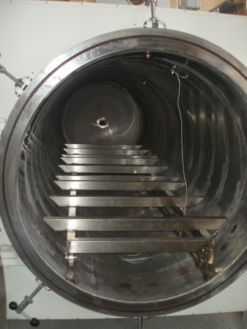
Vacuum furnaces

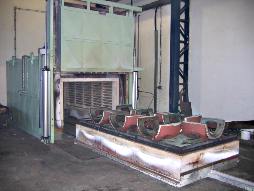
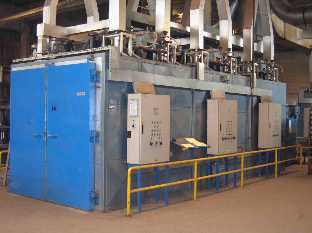


- EKN 2001
- EKV 60E


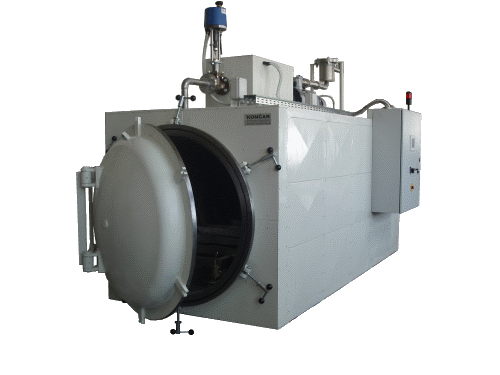
Advantages of vacuum drying
-Lower operating temperature
-Shorter drying times
-Lower energy consumption
-Better moisture distribution
-Return of initial investment in short period
Application of vacuum drying
-Drying of wood
-Drying of grindstone
-Drying of other materials
Operating principle of vacuum drying
Vacuum drying is based on physical effect of changing boiling boint of water (and other fluids and gases)
depending of pressure. As an example it is well known that it is easier to boil water at high alttitues than at lowland (as a consequence of pressure drop).
By achieving low enough pressure it is possible to dry at room temperature.
Technical characteristics of presented drier
1) Useful dimensions ( crucible ) :
- diameter 1100 mm
- length 3000 mm
2) Useful dimensions ( each of three loading "baskets" )
- length 900 mm
- width 900 mm
- height 500 mm
3) Power of heating during phase without vacuum
- 24 kW
4) Power of heating during phase with vacuum
- 4.5 kW
5) Vacuum pump
- power 4 kW
- flow max 200 m3 / h
- max. 4 l of water / h
- deepest vacuum 0,1 mBar
6) Method of material manipulation
- double cart
Control
Control is based on siemens PLC
Advanced algorithm of regulation
-continuous regulation of pressure and temperature
-fast optimizing of work parameters
-simple user interface
Regulation algorithm is our own solution
Other applications of vacuum furnaces:
-freeze drying
drying of material which is frozen during process,
drying is direct phase change from solid phase to gas phase
-heat treatment under protective atmosphere
furnace atmosphere is completely exchanged with protective gas
(protective gas consumption is lower compered to classic processes and quality is higher)
-casting and welding
special processes of casting and welding are enabled:
- without air (prevents oxidation)
- brazing of ceramics and metals
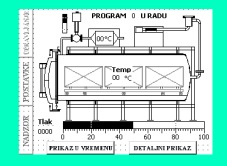
- EKN 1001
